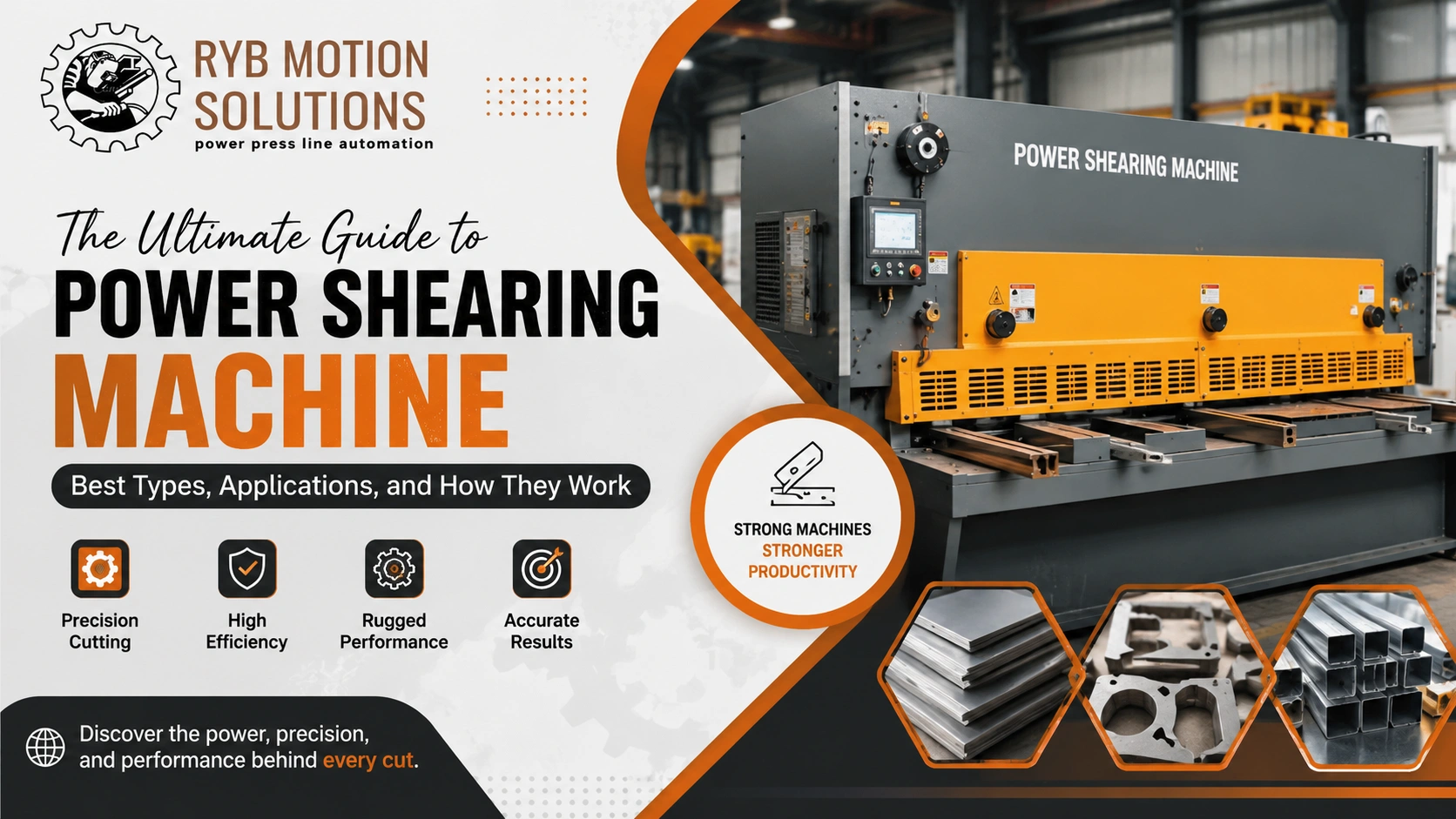
In today’s metal manufacturing industry, accurate cutting is a necessary element that ensures product quality as well as efficient manufacturing processes. One of the best ways to ensure accurate cutting in any manufacturing industry is through the use of shearing machines. Whether in small companies or big industrial firms, the shearing machine is important in cutting metal sheets precisely and efficiently.
RYB Motion Solution realizes the need for quality sheet metal processing equipment in various industries. The following guide will be very important in understanding what is a shearing machine, how it works, its types, uses, and benefits.
What is Shearing Machine?
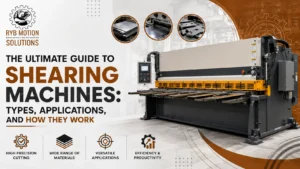
Shearing machines are those industrial tools that are used to make cuts in metals and other types of materials in sheet form without causing chipping and heating effects. This machine makes use of two opposing blades on upper and lower sides to create an intense pressure effect on materials, which results in breaking them in the desired fashion.
This procedure of cutting metals and other materials with the help of intense pressure is called shearing because it causes a breaking action due to the strong pressure on the materials. It is highly preferred by the manufacturing and automobile industry because of its fast and accurate performance.
The basic question that may come to our mind regarding this machine is “What is shearing machine?”
How Does a Shearing Machine Work?
The working principle of a shearing machine is relatively simple but highly effective.
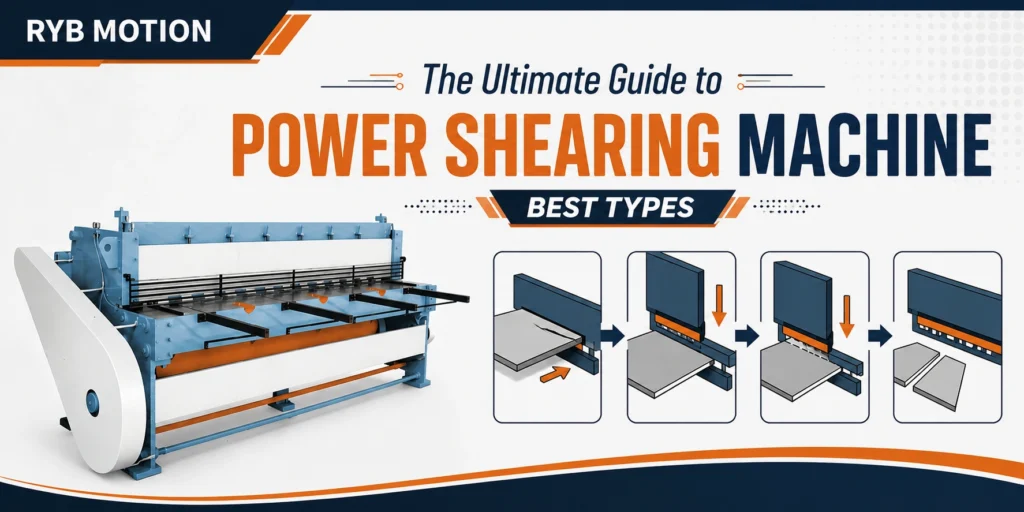
Step-by-Step Working Process
- The metal sheet is placed on the machine table.
- The sheet is aligned according to the desired cutting dimensions.
- Hold-down clamps secure the material firmly.
- The upper blade moves downward against the fixed lower blade.
- A high shearing force is generated.
- The metal fractures along the cutting line.
- A clean and precise cut is achieved.
This process allows manufacturers to cut large quantities of sheet metal with excellent accuracy and minimal material waste.
Main Components of a Power Shearing Machine
A modern power shearing machine consists of several important components:
1. Upper Blade
The moving blade that performs the cutting action.
2. Lower Blade
A fixed blade that supports the material during cutting.
3. Hold-Down System
Prevents movement of the sheet during operation.
4. Back Gauge
Ensures accurate and repeatable cutting lengths.
5. Drive Mechanism
Provides the force required for cutting.
6. Control Panel
Allows operators to manage machine settings and operations.
7. Machine Frame
Provides structural strength and stability.
Types of Power Shearing Machines
Different industries require different cutting capacities and precision levels. The following are the most common types of shearing machines.
1. Mechanical Shearing Machine
A mechanical shearing machine uses a motor-driven flywheel and clutch mechanism to generate cutting force. These machines are known for their fast cutting speed and high productivity.
Features:
- High-speed operation
- Robust construction
- Suitable for continuous production
- Lower maintenance requirements
- Cost-effective solution
Applications:
- Sheet metal fabrication
- Automobile components
- Electrical panels
- HVAC manufacturing
The mechanical shearing machine remains one of the most popular choices for medium and high-volume production environments.
2. Hydraulic Shearing Machine
Hydraulic shearing machines use hydraulic cylinders to generate cutting force.
Features:
- Smooth operation
- Higher cutting accuracy
- Adjustable cutting pressure
- Suitable for thicker materials
- Lower vibration
Applications:
- Heavy engineering
- Steel processing
- Industrial fabrication
- Structural manufacturing
3. CNC Shearing Machine
Computer Numerical Control (CNC) shearing machines offer automated cutting operations with exceptional precision.
Features:
- Programmable operations
- High repeatability
- Reduced human error
- Increased productivity
- Digital control systems
Applications:
- Aerospace industry
- Precision manufacturing
- High-volume production
4. Pneumatic Shearing Machine
These machines use compressed air to perform cutting operations.
Features:
- Fast operation
- Compact design
- Easy maintenance
- Energy efficient for light-duty applications
Applications:
- Small workshops
- Thin sheet processing
- Electronics manufacturing
What is a Sheet Shearing Machine?
The sheet shearing machine is a machine that is especially developed for the purpose of cutting metal sheets to the desired size. The machine is usually found in workshops where metal sheets like steel, aluminum, copper, brass, and stainless steel are being fabricated.
Sheet shearing machines increase efficiency through automation and consistency.
Advantages:
- Faster production
- Better dimensional accuracy
- Reduced material wastage
- Improved workplace safety
Understanding Sheet Metal Shearing Machine
A sheet metal shearing machine is a specialized machine designed to cut various sheet metal materials with high precision.
Industries handling metal fabrication depend heavily on these machines because they provide:
- Straight and burr-free cuts
- Consistent production quality
- Faster processing times
- Reduced labor costs
- Enhanced operational efficiency
Modern sheet metal shearing machine models often include programmable controls, automatic back gauges, and advanced safety systems.
Applications of Shearing Machines
Shearing machines are used across numerous industries.
Automotive Industry
Used for cutting:
- Vehicle body panels
- Chassis components
- Structural parts
Construction Industry
Used for:
- Roofing sheets
- Structural steel sections
- Building components
Electrical Industry
Used for:
- Electrical cabinets
- Control panels
- Switchgear enclosures
Aerospace Industry
Used for:
- Aircraft components
- Precision metal parts
Metal Fabrication Workshops
Used for:
- Sheet cutting
- Plate processing
- Customized fabrication work
Benefits of Using Power Shearing Machines
High Productivity
Power shearing machines can process large volumes of metal sheets quickly, increasing production output.
Superior Accuracy
Modern machines provide precise cuts that reduce rework and improve product quality.
Cost Savings
Less material wastage and reduced labor costs contribute to overall operational savings.
Enhanced Safety
Advanced safety mechanisms protect operators during machine operation.
Versatility
Capable of cutting various materials and thicknesses.
Long Service Life
Heavy-duty construction ensures years of reliable performance.
How to Choose the Right Shearing Machine
Selecting the correct machine depends on several factors.
Material Type
Determine whether you will be cutting steel, stainless steel, aluminum, brass, or copper.
Material Thickness
Choose a machine capable of handling your required thickness range.
Production Volume
For high-volume production, a mechanical shearing machine or CNC model may be ideal.
Cutting Accuracy
Precision applications require advanced hydraulic or CNC machines.
Budget
Evaluate initial investment, maintenance costs, and long-term operating expenses.
Future Expansion
Consider future production growth before making a purchase decision.
Maintenance Tips for Shearing Machines
Proper maintenance improves machine performance and lifespan.
Regular Blade Inspection
Check blades for wear and damage.
Lubrication
Lubricate moving components regularly.
Hydraulic System Checks
Monitor hydraulic oil levels and system pressure.
Alignment Verification
Ensure blades remain properly aligned.
Electrical Inspection
Check wiring and control systems periodically.
Clean Working Area
Remove metal scraps and debris after the operation.
Safety Precautions During Operation
To ensure safe operation:
- Wear protective equipment.
- Keep your hands away from the cutting zones.
- Follow operating guidelines.
- Inspect the machine before use.
- Use proper material handling techniques.
- Never bypass safety devices.
- Provide operator training.
Safety should always remain a top priority in every manufacturing environment.
Future Trends in Shearing Machine Technology
The shearing industry continues to evolve with advancements in automation and smart manufacturing.
Emerging trends include:
- CNC automation
- IoT-enabled monitoring
- Energy-efficient systems
- Predictive maintenance
- Smart production integration
- Improved cutting accuracy
- Advanced safety technologies
These innovations are helping manufacturers achieve higher productivity and lower operational costs.
Conclusion
One thing for sure, a shearing machine is among the most vital machines used in the metals processing industry. No matter whether you are looking for mechanical shearing machines, sheet shearing machines, or precision sheet metal shearing machines, making the right decision about the right equipment will certainly add value to your business.
At RYB Motion Solution, we always strive to offer innovative metal processing machines that cater to the changing demands of today’s market environment. Knowing more about what is shearing machine all about, how it works, and its different forms will help businesses benefit from it for years to come.