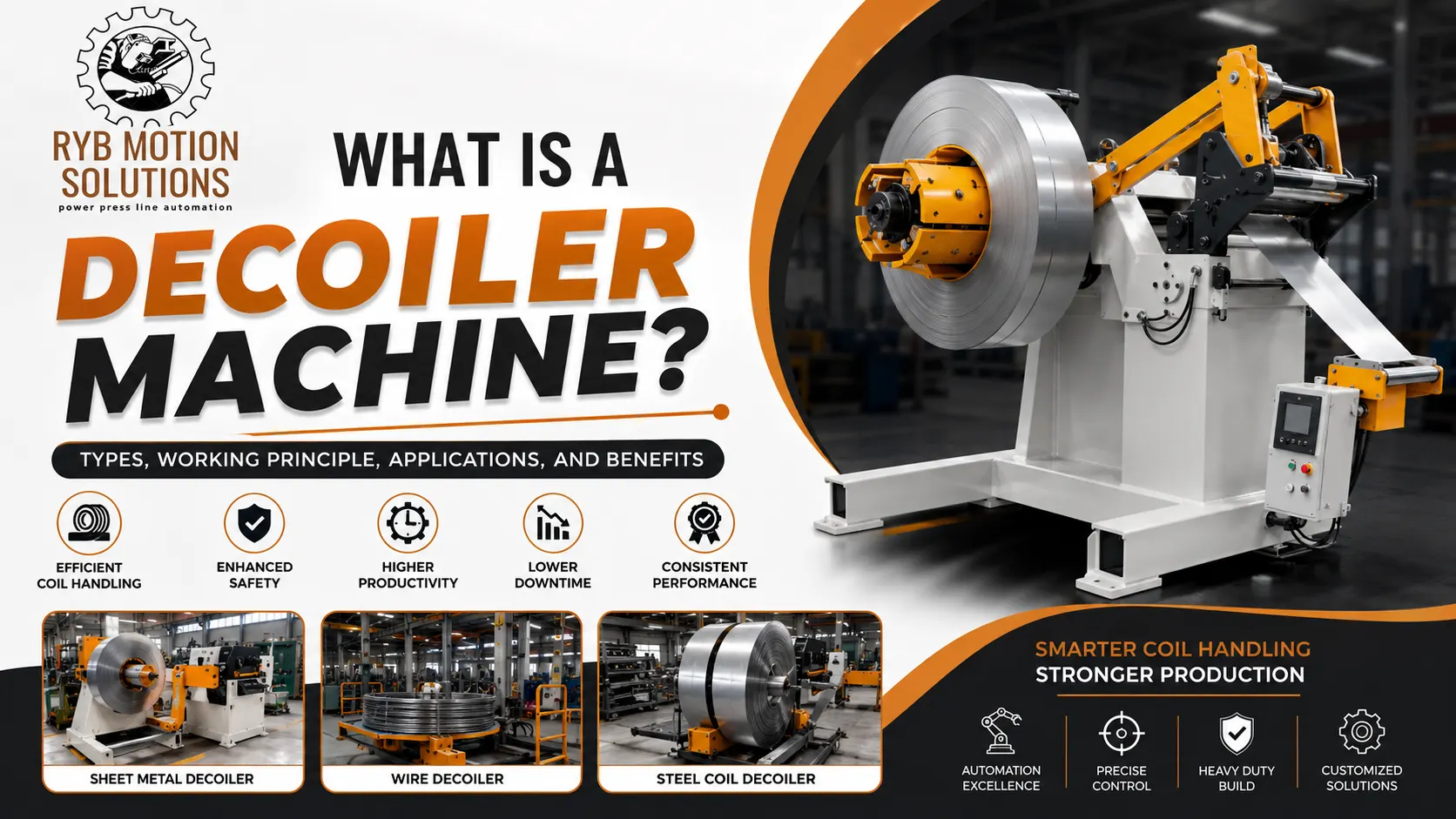
In modern manufacturing, efficient material handling is key to keeping productivity high and making sure production goes smoothly. A crucial decoiler machine for dealing with sheet metal and coils is the decoiler. It’s built to unwind metal coils and feed them into different production lines with accuracy and consistency. So, without these machines, many processes would be much harder to manage.
Introduction to Decoiler Machines
In areas like car making, metalwork, roofing, and machinery factories, decoilers make operations smoother by cutting down on manual work and improving how materials move. At Ryb Motion Solution, we recognize that there’s a rising need for top-notch coil handling to boost efficiency and cut downtime.
This detailed guide covers all things decoiler machines—how they work, different types, uses, benefits, and important stuff to think about before you buy one.
What Is a Decoiler Machine?
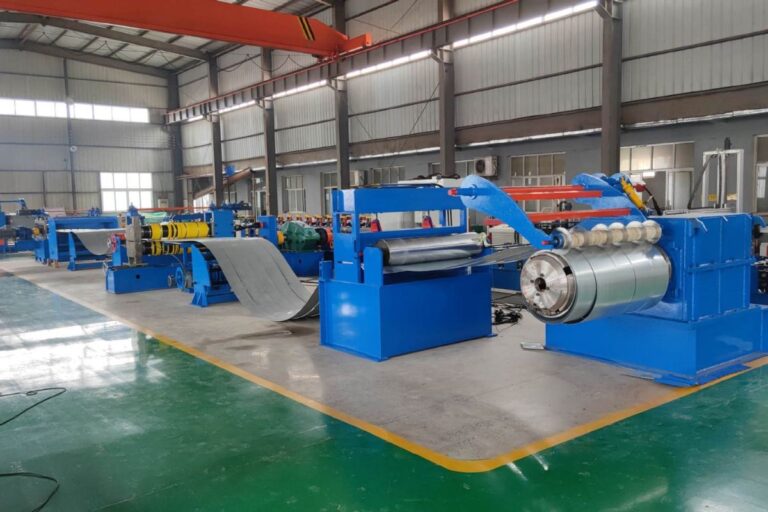
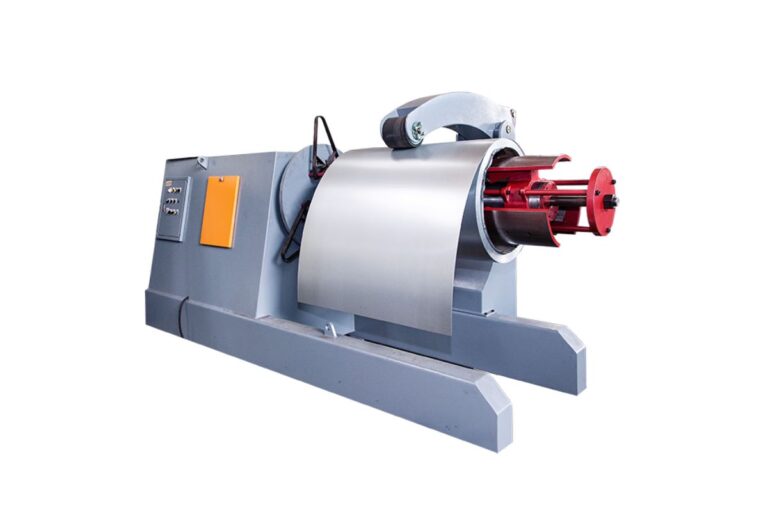
A decoiler machine is used to hold, unwind, and feed coiled metal strips into processing equipment like roll formers, presses, stamping lines, cutters, and tube mills.
Metal coils are typically rolled up tightly for transport and storage. Then, the decoiler takes these coils, slowly unwinds them, and feeds the material at a steady pace to keep production smooth and interruption-free.
The machine can handle various materials, including:
- Mild steel coils
- Stainless steel coils
- Aluminum coils
- Copper coils
- Galvanized steel coils
- Pre-painted metal coils
A properly selected decoiler improves productivity while preventing material damage and feeding inconsistencies.
Working Principle of a Decoiler Machine
The working principle of a decoiler is pretty simple yet really effective.
You mount the metal coil on an expandable mandrel or spindle, then secure it. As the machine slowly spins the coil, it unwinds the material. From there, the strip slides into the production line thanks to rollers and feeding systems.
Basic Working Process
- Coil loading onto the mandrel.
- Expansion of the mandrel to secure the coil.
- Controlled rotation of the spindle.
- Smooth unwinding of the coil.
- Feeding the material into the downstream equipment.
- Continuous monitoring of tension and speed.
Advanced systems may include automatic speed synchronization, loop control, tension regulation, and servo feeding mechanisms.
Main Components of a Decoiler Machine
Understanding the major components helps users evaluate machine quality and performance.
1. Mandrel
The mandrel holds the metal coil securely and expands to fit different coil diameters.
2. Coil Support Arms
Support arms prevent the coil from shifting during operation.
3. Drive Motor
The motor powers the spindle and controls coil rotation.
4. Control Panel
The control system allows operators to manage speed, direction, and feeding parameters.
5. Roller Guides
Guide rollers ensure smooth strip movement and proper alignment.
6. Safety Mechanisms
Emergency stops, overload protection, and safety covers improve operational safety.
Types of Decoiler Machines
Different industries require different decoiling solutions. Below are the most common types available.
1. Manual Decoiler
A manual decoiler is operated without motorized assistance.
Features:
- Cost-effective
- Easy operation
- Suitable for small production volumes
Applications:
- Small workshops
- Fabrication units
- Low-volume production lines
2. Motorized Decoiler
Motorized systems use electric motors for automatic coil unwinding.
Features:
- Higher productivity
- Consistent feeding
- Reduced labor requirements
Applications:
- Medium-scale manufacturing
- Sheet metal processing
- Roll forming operations
3. Hydraulic Decoiler
Hydraulic decoilers use hydraulic systems for coil expansion and handling.
Features:
- High load capacity
- Smooth operation
- Ideal for heavy coils
Applications:
- Steel service centers
- Automotive industries
- Heavy engineering plants
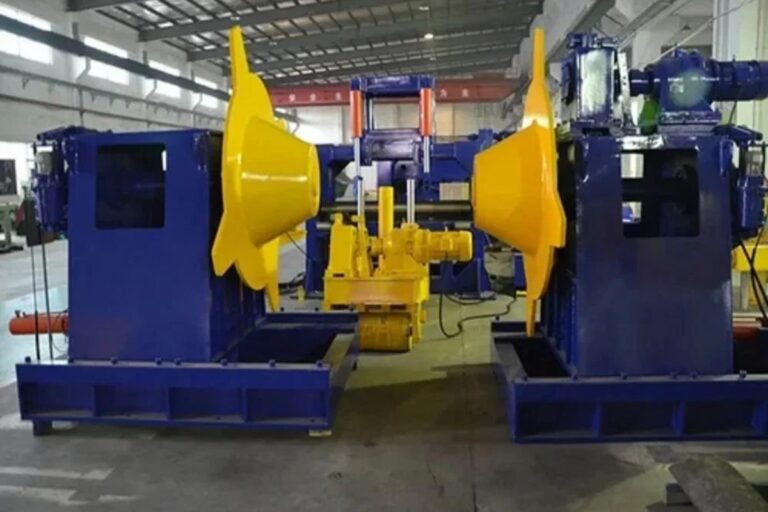
4. Double Head Decoiler
This system includes two mandrels, allowing quick coil changes and reduced downtime.
Features:
- Increased productivity
- Faster coil replacement
- Continuous production capability
Applications:
- High-speed production lines
- Mass manufacturing facilities
Wire Decoiler and Its Importance
A wire decoiler is made for unwinding wire coils in cable manufacturing, wire drawing, fencing, and the electrical industries.
It differs from sheet metal decoilers because it’s built to handle flexible wires. It keeps tension control and prevents tangling, too.
Common Applications of Wire Decoilers
- Electrical cable manufacturing
- Wire mesh production
- Spring manufacturing
- Fastener production
- Welding wire processing
The use of a wire decoiler improves productivity and ensures uninterrupted wire feeding during production.
Sheet Metal Decoiler
A sheet metal decoiler handles coils that go into stamping presses, roll forming machines, and cutting systems. It makes sure the feeding is even and keeps the quality high by reducing material distortion.
Industries Using Sheet Metal Decoilers
- Construction
- HVAC manufacturing
- Roofing panel production
- Furniture manufacturing
- Appliance production
A high-quality sheet metal decoiler significantly improves production accuracy and reduces material wastage.
Steel Coil Decoiler
A steel coil decoiler is made to deal with heavy coils used in industry.
These coils are huge and hefty, so they need strong machines that can keep feeding steadily even when the work is tough, you see.
Advantages of Steel Coil Decoilers
- High load capacity
- Precision feeding
- Improved worker safety
- Reduced downtime
- Increased production efficiency
Steel Coil Decoiling Machine
A steel coil decoiling machine plays a critical role in modern coil processing lines.
It is commonly integrated with:
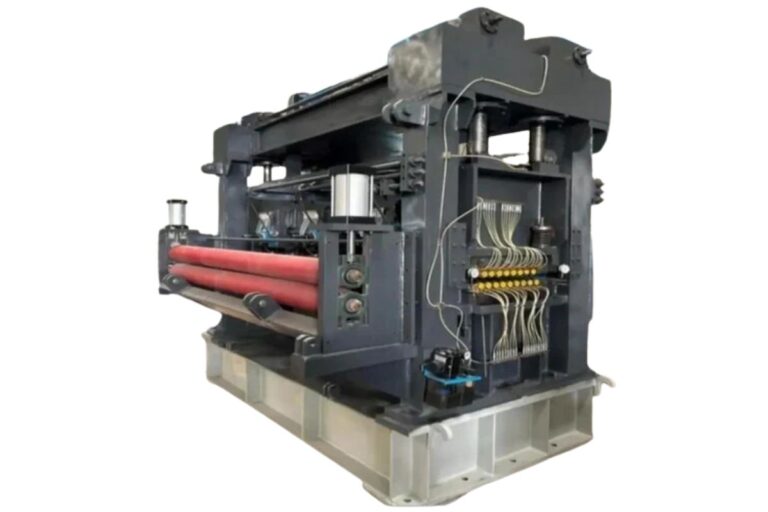
- Straightening machines
- Levelers
- Servo feeders
- Press machines
- Roll forming equipment
- Cut-to-length lines
The steel coil decoiling machine helps maintain continuous production while reducing handling errors and improving material flow.
Applications of Decoiler Machines
Decoiler machines are widely used across various industries.
Automotive Industry
Used for feeding metal sheets into stamping and pressing machines.
Construction Industry
Supports roofing sheet production, structural components, and metal panel manufacturing.
Electrical Industry
Used with wire processing and cable manufacturing lines.
Appliance Manufacturing
Feeds metal sheets into fabrication equipment for home appliances.
Aerospace Industry
Handles precision metal strips for aircraft component production.
Metal Fabrication Industry
Supports cutting, bending, punching, and forming operations.
Benefits of Using a Decoiler Machine
Investing in a high-quality decoiler provides numerous operational advantages.
Improved Productivity
Automated coil feeding reduces downtime and increases output.
Consistent Material Flow
Uniform feeding improves product quality and process stability.
Reduced Labor Costs
Automation minimizes manual handling requirements.
Enhanced Safety
Proper coil handling reduces workplace accidents.
Better Material Utilization
Accurate feeding minimizes waste and improves efficiency.
Increased Equipment Life
Controlled feeding reduces stress on downstream machinery.
Decoiler Machine for Sale: What to Consider Before Buying
When searching for a decoiler machine for sale, several factors should be evaluated carefully.
Coil Weight Capacity
Ensure the machine can handle your maximum coil weight.
Coil Width
Select a machine compatible with your material dimensions.
Material Type
Different materials may require specialized feeding systems.
Automation Level
Choose between manual, motorized, hydraulic, or fully automatic models.
Production Speed
Match the machine’s capabilities with your production requirements.
Safety Features
Prioritize machines equipped with advanced safety systems.
How to Choose the Right Decoiler for Your Business
Choosing the right decoiler depends on production goals and operational requirements.
Consider:
- Coil dimensions
- Material thickness
- Production volume
- Available floor space
- Budget
- Future expansion plans
Working with experienced manufacturers such as Ryb Motion Solution can help businesses identify the most suitable solution for their specific applications.
Why Choose Ryb Motion Solution?
At Ryb Motion Solution, we focus on top-notch coil handling and automation for today’s industrial spaces. Our decoiler systems offer dependable performance, excellent durability, and precise material feeding for various manufacturing uses.
We provide wire decoilers, sheet metal decoilers, and steel coil decoilers, plus customized sheet coil decoiling machines, too. The team crafts innovative solutions to fit your specific production needs.
Conclusion
A decoiler machine is super important in today’s manufacturing and metal processing fields. These devices range from basic manual models to sophisticated hydraulic and automated types, boosting productivity, enhancing safety, and making material handling smoother during production.
If you’re in the market for a decoiler machine, whether it’s a decoiler for sale, a wire decoiler, a sheet metal decoiler, a steel coil decoiler, or a complete steel coil decoiling machine, setups, getting the right gear can seriously bump up your efficiency and product quality.
Using know-how, creativity, and a focus on customer needs, Ryb Motion Solution keeps offering reliable decoiler options that help industries grow and excel in manufacturing.