Today, the manufacturing sector operates in a highly competitive environment that demands accuracy, speed, and automation for optimal efficiency. Metal stamping, sheet metal fabrication, automotive manufacturing, electronics, and engineering all require sophisticated feeding equipment that will facilitate smooth production processes. The pneumatic feeder machine is among some of the most effective automated feeding solutions available today.
The pneumatic feeder machine feeds raw materials like metal coils, metal sheets, and other similar elements into punching, stamping, and pressing machines with incredible accuracy. In doing so, they minimize material waste, increase production speed, and create a safer working environment by eliminating the need for human intervention.
Here at RYB Motion Solution, we have been keeping up with developments in the manufacturing industry. In this ultimate guide, we will be covering everything you need to know about the pneumatic feeder machine, from its working principle, types, benefits, applications, maintenance needs, and factors influencing the price of pneumatic feeder machines.
What Is a Pneumatic Feeder?
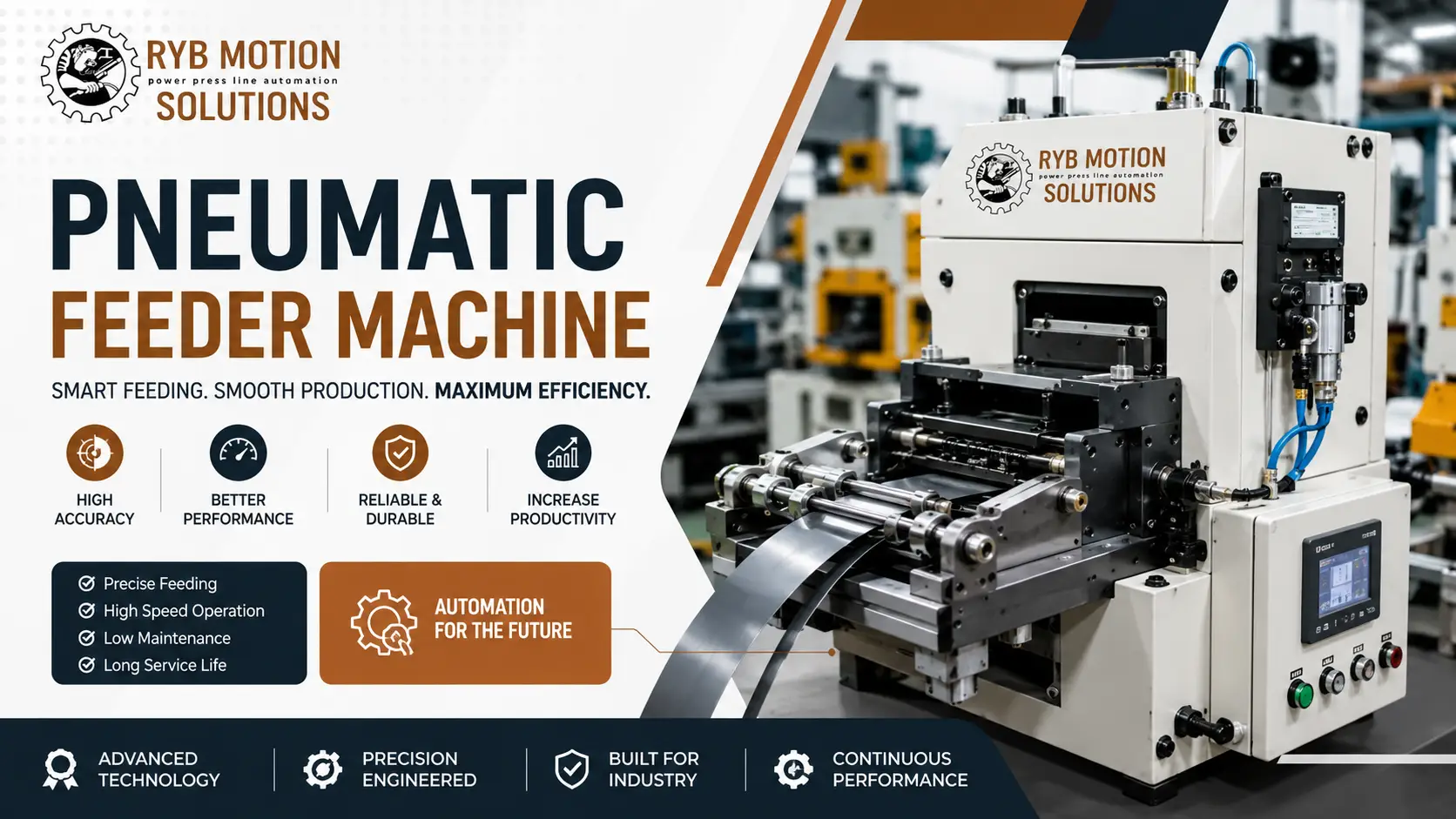
A pneumatic feeder machine is an automatic feeder powered by compressed air to transport material into manufacturing machinery such as power presses, punch presses, and stamping machines. Pneumatic feeders operate on the principles of pneumatic cylinders, valves, and pressurized air to enable precise material delivery.
Compared to other methods of feeding, pneumatic air feeders guarantee precise feed lengths, high throughput, and quality end products. They are typically used in manufacturing plants where the material feed is constant.
As a result of the increasing need for automation in today’s world, pneumatic feeder machines have gained popularity within the manufacturing sector.
Pneumatic Feeder Working Principle
Understanding pneumatic feeder working is essential for selecting the right machine for your production line.
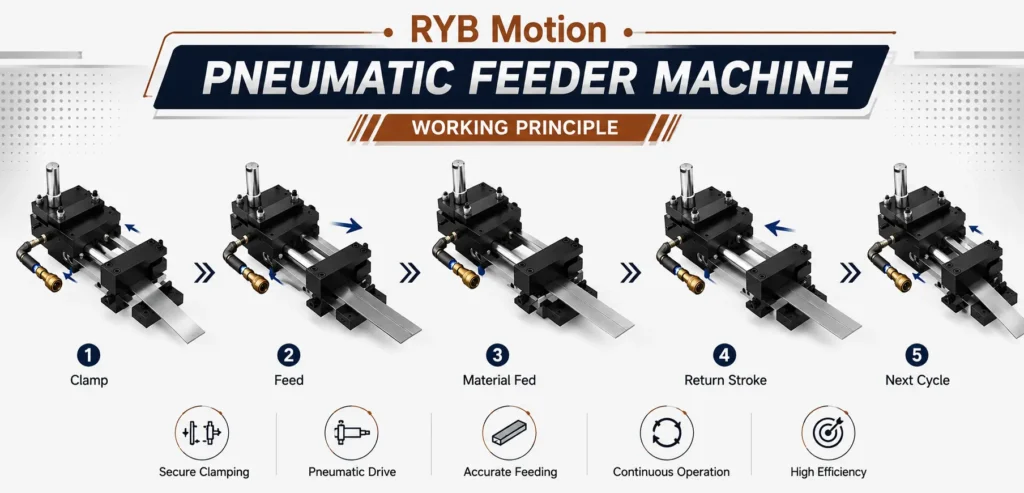
The operation of a pneumatic feeder machine primarily depends on compressed air. Here’s how the process works:
1. Clamp
The clamping mechanism in the pneumatic feeder securely clamps the material during the first part of the cycle. The material is thus prevented from slipping, ensuring that it is positioned correctly throughout the feeding process.
2. Feed Stroke
The drive system of the feeder is powered by compressed air, and this makes the system move forward. As a result, the material that is held together is pushed forward based on the predetermined Feed Stroke length.
3. Material Fed
Once the feed stroke is complete, the material reaches the press, punching machine, or processing station at the required distance. Accurate feeding improves production quality and reduces material wastage.
4. Return Stroke
After the material is fed, the feeder carriage returns to its original position. During the return stroke, the gripping mechanism holds the material in place, preventing it from slipping backward and keeping it ready for the next feed.
5. Next Cycle
The feeder repeats the clamping and feeding process. This continuous cycle ensures uninterrupted operation, enhanced productivity, and consistent feeding accuracy in high-speed production lines.
Key Features of Pneumatic Feeder Machine
- Secure Clamping: Material ko firmly hold karta hai.
- Pneumatic Drive: Compressed air se smooth operation.
- Accurate Feeding: Precise feed length maintain karta hai.
- Continuous Operation: High-speed production ke liye suitable.
- High Efficiency: Productivity badhata hai aur manual handling kam karta hai.
Applications
- Power Press Machines
- Sheet Metal Processing
- Punching Operations
- Stamping Lines
- Automotive Components Manufacturing
- Electrical Panel Production
- Metal Strip Feeding Systems
Overall Operation: The pneumatic feeder machine operates by making use of compressed air to automatically feed metal strips/coil material into the press machine sequentially, thus greatly increasing the efficiency and effectiveness of production.
Main Components of a Pneumatic Feeder
A standard pneumatic feeder machine consists of several important components:
Pneumatic Cylinder
Provides the driving force for material movement.
Air Control Valve
Controls the direction and flow of compressed air.
Material Clamp
Holds the material securely during feeding.
Feed Adjustment Mechanism
Allows operators to adjust feeding length.
Air Filter Regulator Lubricator (FRL)
Ensures clean and regulated air supply.
Control Unit
Coordinates feeder operation with the press machine.
Mounting Assembly
Supports feeder installation on the production line.
Each component plays a critical role in maintaining accurate and reliable feeding performance.
Types of Pneumatic Feeders
Different industrial applications require different feeding systems. Below are the most commonly used types:
1. Standard Pneumatic Feeder
This is the most widely used feeder type for general sheet metal processing and stamping operations.
Features:
- Simple design
- Easy installation
- Cost-effective operation
- Reliable feeding performance
2. High-Speed Pneumatic Feeder
Designed specifically for high-production manufacturing environments.
Features:
- Fast feeding cycles
- High accuracy
- Suitable for automated production lines
- Reduced downtime
3. Pneumatic Feeder for Power Press
A pneumatic feeder for power press is specially engineered to work alongside power press machines.
Benefits:
- Synchronization with press operations
- Consistent feeding accuracy
- Increased productivity
- Reduced manual handling
These feeders are widely used in the automotive and sheet metal industries.
4. Pneumatic Punch Press Feeder
A pneumatic punch press feeder is designed to feed materials into punch press machines for punching, blanking, and forming operations.
Advantages:
- Accurate material positioning
- Faster punching cycles
- Better product consistency
- Reduced operator fatigue
5. Festo Pneumatic Feeder
The Festo pneumatic feeder machine is known globally for its advanced engineering and reliable pneumatic automation solutions.
Features:
- High-quality construction
- Precise feeding control
- Long service life
- Excellent efficiency
Many manufacturers prefer Festo systems due to their exceptional durability and automation capabilities.
Benefits of Using a Pneumatic Feeder
Investing in a pneumatic feeder machine offers numerous operational and financial advantages.
Improved Productivity
Automated feeding significantly increases production speed by eliminating manual feeding delays.
Enhanced Accuracy
Precise feed lengths improve product quality and reduce defects.
Reduced Labor Costs
Automation minimizes dependence on manual operators.
Increased Safety
Workers are kept away from moving press components, reducing workplace accidents.
Consistent Performance
Pneumatic systems provide uniform feeding throughout the production process.
Lower Material Wastage
Accurate feeding minimizes scrap generation and improves material utilization.
Easy Integration
A pneumatic feeder machine can be integrated with existing power presses and punch press machines.
Applications of the Pneumatic Feeder Machine
Pneumatic feeder Machines are used across numerous industrial sectors.
Metal Stamping Industry
Feeding metal strips into stamping presses.
Automotive Manufacturing
Production of automotive body parts and components.
Electrical Industry
Manufacturing switchgear components and electrical fittings.
Appliance Manufacturing
Producing household appliance parts.
Hardware Industry
Fabrication of brackets, clips, hinges, and fasteners.
Sheet Metal Processing
Continuous feeding for cutting and forming operations.
Electronics Manufacturing
Feeding precision metal components for electronic assemblies.
Their versatility makes pneumatic feeder machines a valuable asset in modern manufacturing facilities.
Factors Affecting Pneumatic Feeder Price
One of the most common questions buyers ask is about the pneumatic feeder price.
Several factors influence the overall cost:
Feed Length Capacity
Longer feed lengths typically increase machine cost.
Material Thickness
Machines designed for heavier materials require stronger components.
Automation Level
Advanced control systems add to the overall investment.
Brand Reputation
Premium brands often command higher prices.
Production Speed
High-speed feeders generally cost more due to enhanced performance capabilities.
Customization Requirements
Special modifications and custom designs can affect pricing.
Businesses should evaluate their production needs before selecting a feeder system.
How to Choose the Right Pneumatic Feeder
Selecting the right feeder can significantly impact production efficiency.
Consider the following factors:
Material Type
Determine whether you are feeding steel, aluminum, copper, or other materials.
Material Thickness
Ensure compatibility with your production requirements.
Feed Length Requirement
Choose a machine that supports your desired feed range.
Production Volume
High-volume operations may require high-speed feeders.
Machine Compatibility
Verify compatibility with existing press equipment.
Maintenance Requirements
Select a feeder with easy maintenance and readily available spare parts.
Budget Considerations
Balance performance requirements with investment costs.
Maintenance Guide for Pneumatic Feeders
Regular maintenance is essential for ensuring long-term performance.
Daily Inspection
Check air pressure levels and inspect for leaks.
Clean Air Filters
Dirty filters can reduce feeder efficiency.
Lubricate Moving Components
Proper lubrication minimizes wear and tear.
Inspect Clamps
Ensure secure gripping of materials.
Check Pneumatic Hoses
Replace damaged hoses immediately.
Verify Feed Accuracy
Regularly test feed lengths to maintain precision.
Tighten Fasteners
Loose bolts can affect feeder performance.
Proper maintenance helps maximize machine life and reduce unexpected downtime.
Common Problems and Solutions
Irregular Feeding
Cause:
Low air pressure or worn components.
Solution:
Check air supply and replace worn parts.
Material Slippage
Cause:
Weak clamping force.
Solution:
Adjust or replace clamps.
Slow Operation
Cause:
Blocked air lines or inadequate lubrication.
Solution:
Clean air lines and lubricate moving parts.
Feed Length Variations
Cause:
Incorrect settings or mechanical wear.
Solution:
Recalibrate the feeder and inspect components.
Future of Pneumatic Feeding Technology
As manufacturing automation continues to evolve, pneumatic feeders are becoming more intelligent and efficient. Modern systems now feature advanced sensors, digital controls, and integration with Industry 4.0 technologies.
Future pneumatic feeders will offer:
- Smart monitoring systems
- Predictive maintenance capabilities
- Enhanced precision
- Higher operating speeds
- Improved energy efficiency
- Greater integration with automated production lines
These advancements will help manufacturers achieve even higher productivity and profitability.
Conclusion
The use of pneumatic feeding machines is vital if one seeks increased production levels and efficiency in their processes. Whatever type of pneumatic feeding equipment one needs – be it pneumatic feeder for power press, pneumatic punching press feeding system, a pneumatic air feeder, or high-quality Festo pneumatic feeder brand – choosing the right option can boost the company’s performance considerably.
Knowing the principle of pneumatic feeder working operation and comparing pneumatic feeder prices on pneumatic feeders can be crucial for those who are planning on introducing this type of equipment to their factory.
RYB Motion Solutions is ready to offer the best motion control and automation products that will increase production efficiency and decrease costs for your company.