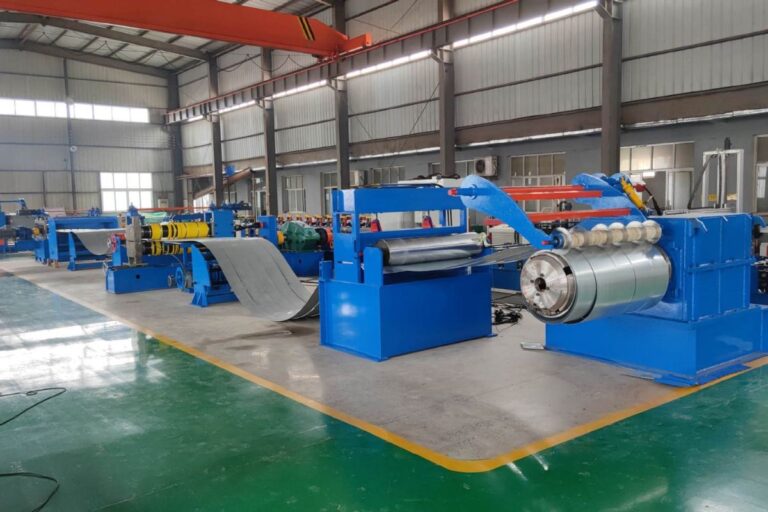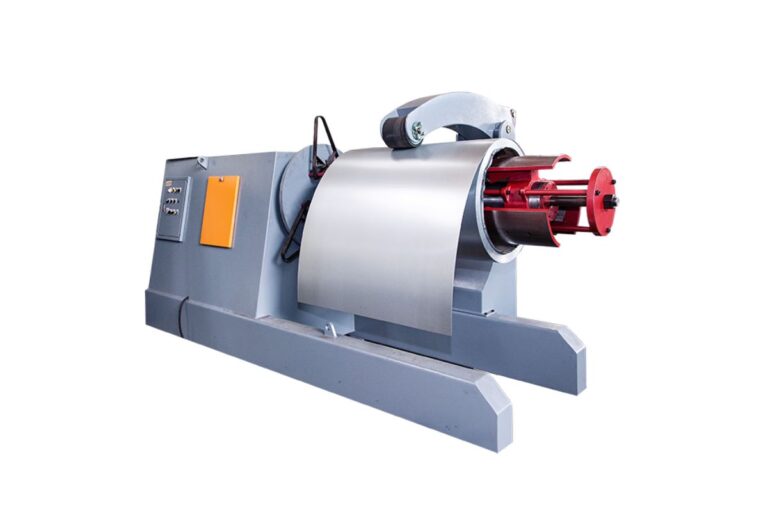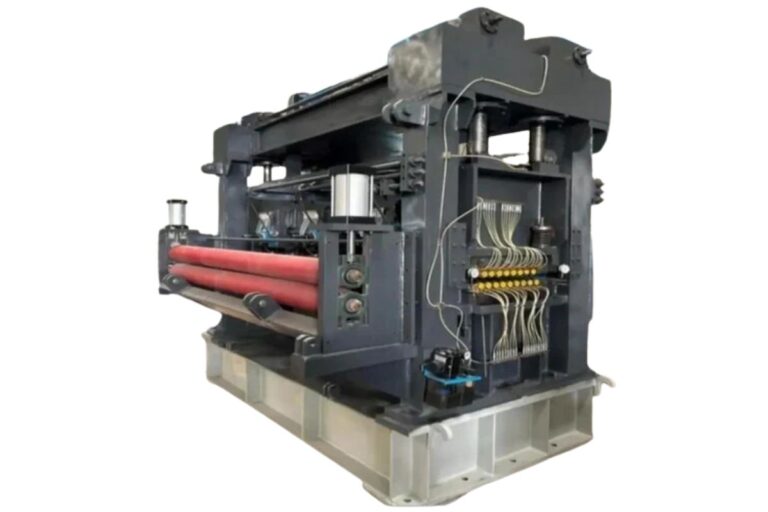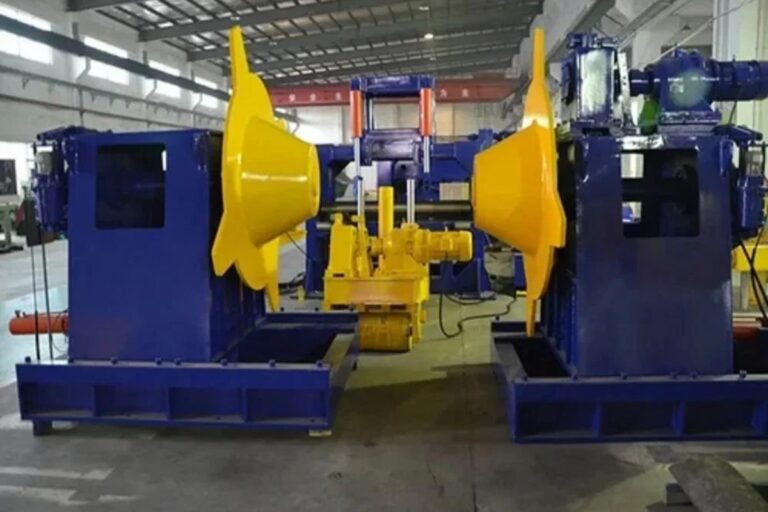
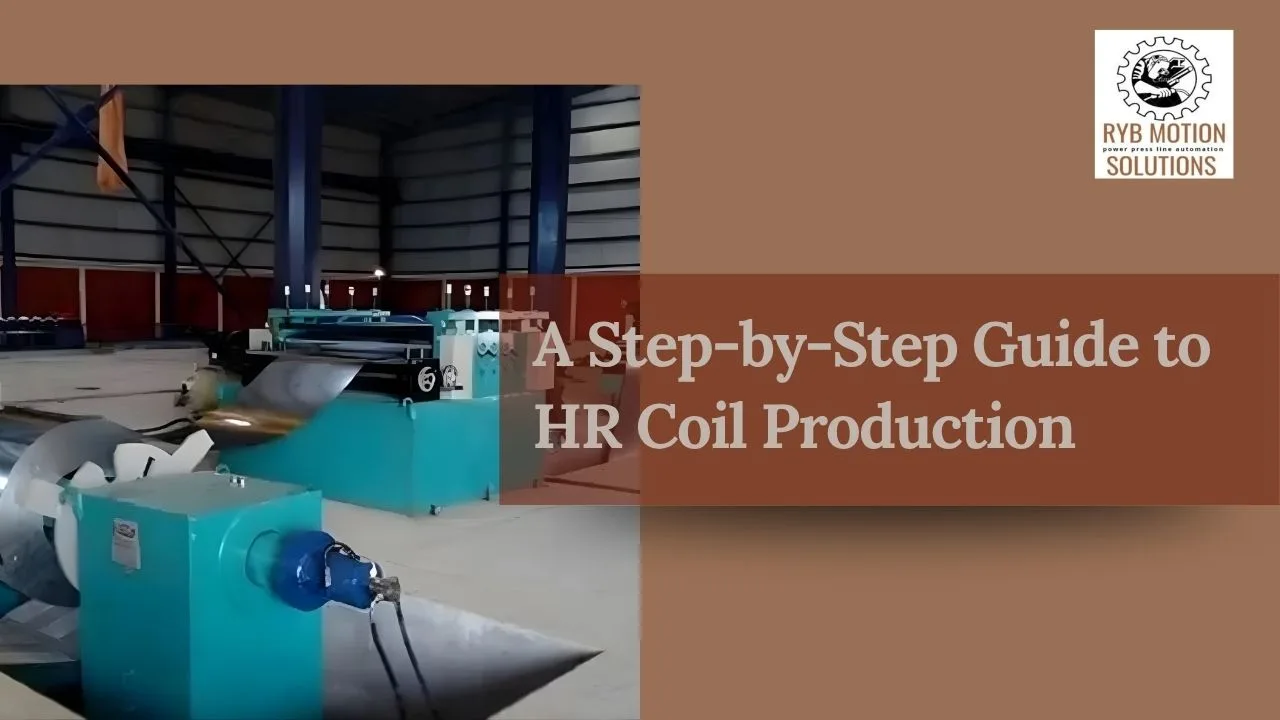
Ryb Motion Solutions is one of the trusted names in the market, we offer advanced machinery and process solutions for the production of HR coils. Our company ensures that every stage of hot rolled coil steel production meets global standards for strength, surface finish, and consistency.
HR coils serve as the base material for several downstream processes like cold rolling, galvanizing, or forming steel sheets. Ryb Motion Solutions, with its state-of-the-art technology and machinery like the HR Cut To Length Machine, ensures that the entire process of hr coil production runs seamlessly with optimal precision.
- Step 1: Raw Material Preparation: The journey of an HR coil begins with the preparation of raw materials. High-quality steel slabs or billets are selected and inspected for uniform composition and absence of defects. These slabs are typically produced through continuous casting methods to ensure similarity.
- Step 2: Reheating the Steel Slabs: The steel slabs are placed inside a reheating furnace, where they are heated to temperatures around 1200°C. This is one of the most critical stages because uniform heating ensures that the steel becomes malleable enough for rolling. Proper temperature control is maintained to prevent surface oxidation and scaling, ensuring the quality of the hot rolled coil steel produced later.
- Step 3: Rough Rolling: After reheating, the hot steel passes through the roughing mill, which consists of a series of rolling stands. The purpose of rough rolling is to reduce the slab thickness and elongate it into a transfer bar. This stage removes scale from the surface and enhances the steel’s grain structure.
- Step 4: Finishing Mill Process: The transfer bar is then sent to the finishing mill, where it undergoes further rolling to achieve the final thickness required for the steel coils. The finishing mill plays a key role in defining the mechanical properties, surface finish, and dimensional accuracy of the hr coil. The rolling process here is carefully monitored using automated control systems to maintain uniformity and prevent defects like edge cracks or uneven surfaces.
- Step 5: Cooling Process: Once the steel strip leaves the finishing mill, it passes through a run-out table equipped with cooling sprays. This controlled cooling ensures that the hr steel coils achieve the desired microstructure and strength. Uneven cooling can lead to warping or internal stresses, so maintaining a balanced cooling rate is essential.
- Ryb Motion Solutions offers high-quality cooling systems that enhance the production efficiency and consistency of hot rolled coil steel.
- Step 6: Coiling: After cooling, the continuous steel strip is wound into large coils using coiling machines. These coils are referred to as HR coils or hot rolled coil steel. The coiling process ensures that the steel remains compact and easy to handle during further transportation or processing.Each hr coil is labeled with specific details like grade, weight, and size for traceability.
- Step 7: Inspection and Quality Control: Quality inspection is one of the most important steps in hr coil production. At Ryb Motion Solutions, the company follows a stringent inspection process to ensure that every steel coil meets client specifications. Parameters such as surface defects, dimensional accuracy, hardness, and tensile strength are carefully analyzed. Advanced sensors and inspection systems help identify even the smallest irregularities.
- Step 8: Cutting and Packaging: After inspection, the coils are cut to the required lengths or widths using high-performance machines such as the HR Cut To Length Machine. This equipment ensures precise cutting with clean edges and minimal material wastage. The cut sheets or strips are then packaged properly for transportation to clients or downstream processing units.
Also Read : Heavy-Duty HR Cut to Length Line for Industrial Use
Applications of HR Coils
HR steel coils are known for their versatility and are used across various sectors, including:
- Automotive Industry: For frames, wheel rims, and body panels.
- Construction: Used in beams, columns, and steel frameworks.
- Machinery: For manufacturing parts that require high strength and toughness.
- Pipelines: Used in making pipes and pressure vessels.
- Shipbuilding: For hull plates and structural sections.
Each hr coil produced under the expertise of Ryb Motion Solutions ensures superior formability and weldability, making it suitable for these demanding applications.
The production of HR coils is a complex yet fascinating process that combines advanced technology, precision engineering, and strict quality control. From raw material heating to coiling and cutting, every stage determines the final performance and durability of the product.
Ryb Motion Solutions, with its industry-leading expertise and modern machinery like the HR Cut To Length Machine, continues to offer innovative solutions that streamline hot rolled coil steel manufacturing. Our company’s commitment to precision, durability, and customer satisfaction makes it a dependable partner for steel producers worldwide.