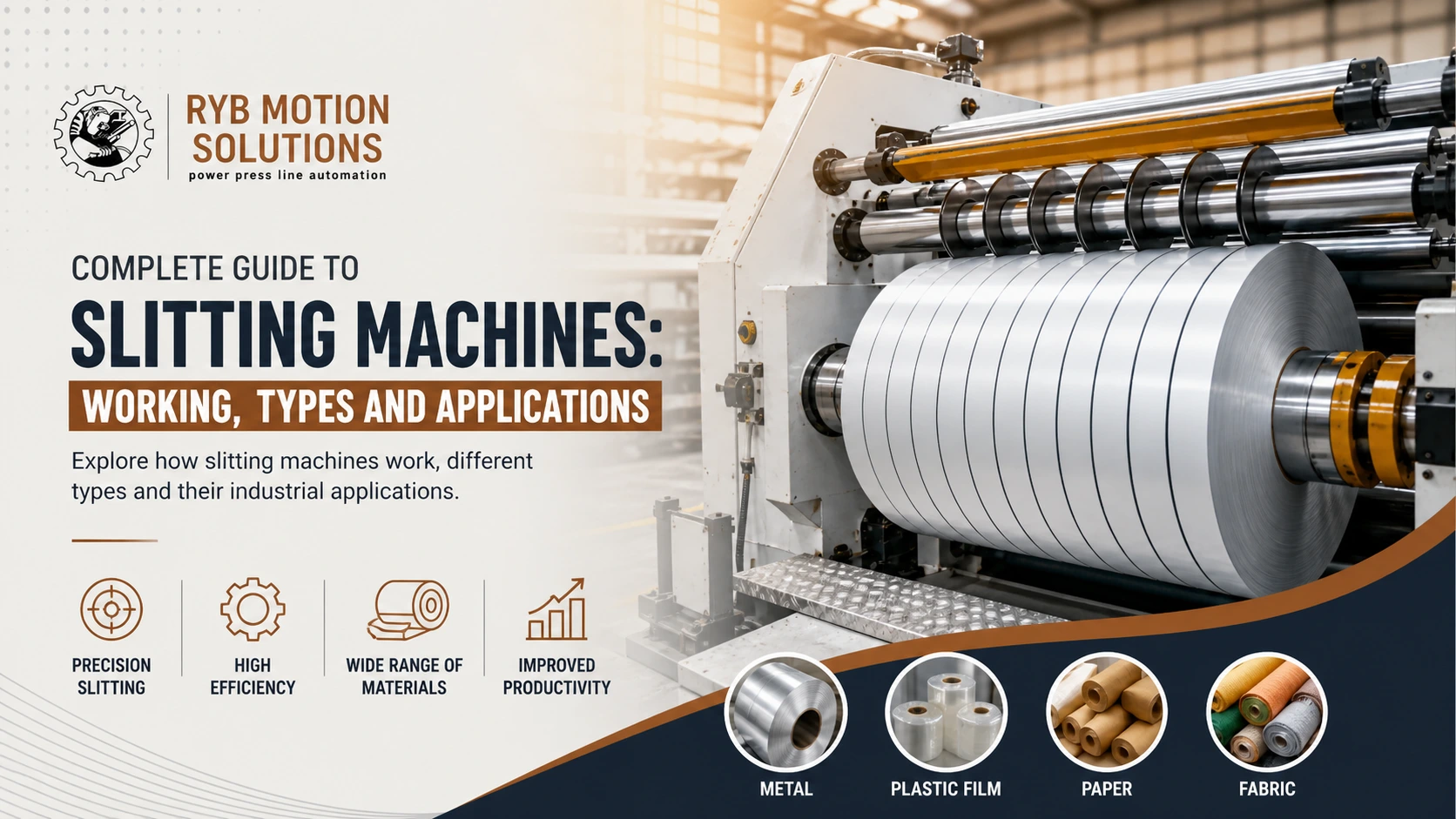
Manufacturing operations today require both speed and accurate results at all times. Advanced machinery enables industrial operations that process materials such as paper, plastic, metal, and textiles to achieve precise operational outcomes. The Slitting Machines function as a vital equipment component. Ryb Motion Solutions provides businesses with solutions that explain complex technology through simple methods and demonstrate how proper machine usage leads to productivity advancement and quality improvement.
This blog will give you a clear understanding of what is a Slitting Machines, how it works, its types, and where it is used.
What is a Slitting Machine?
If you’re wondering what is a slitting machines, it is a specialized industrial machine used to cut large rolls of material into narrower rolls or strips. These materials can include:
- Paper
- Plastic films
- Aluminum foil
- Steel coils
- Fabric
In simple terms, what is a slitter machine? It is a machine designed for the precision cutting of wide material rolls into smaller, usable widths without damaging the material.
You might also hear the term what is a slitter—this generally refers to the cutting mechanism or the entire system used in the slitting process
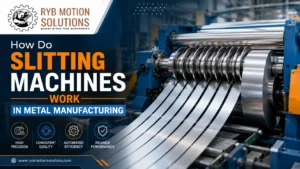
How Does a Slitting Machine Work?
Understanding the working of a slitter machine helps in choosing the right equipment for your industry.
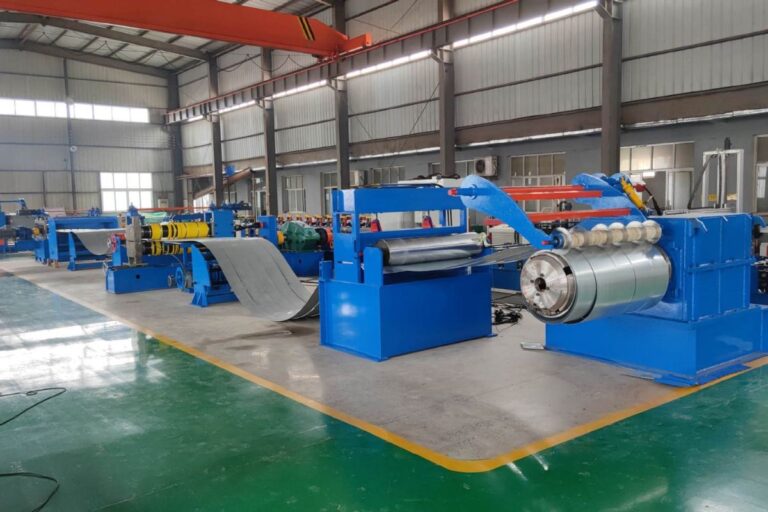
Basic Working Process:
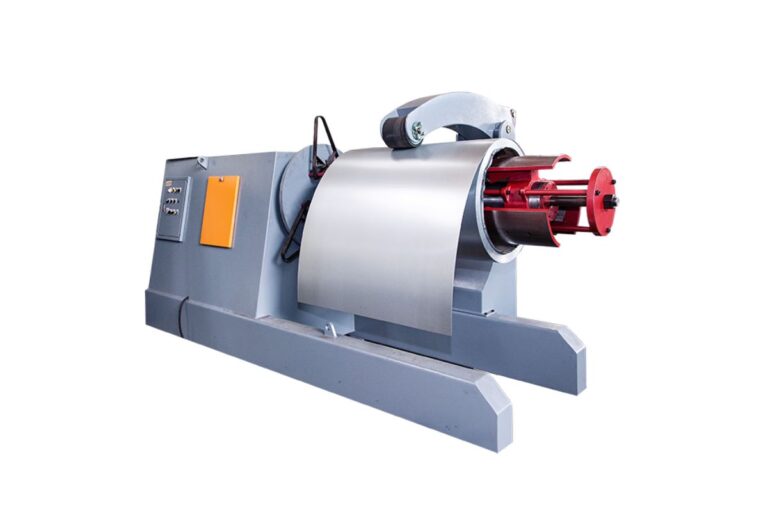
- Unwinding Section
The large master roll of material is placed on the unwinding unit. - Feeding the Material
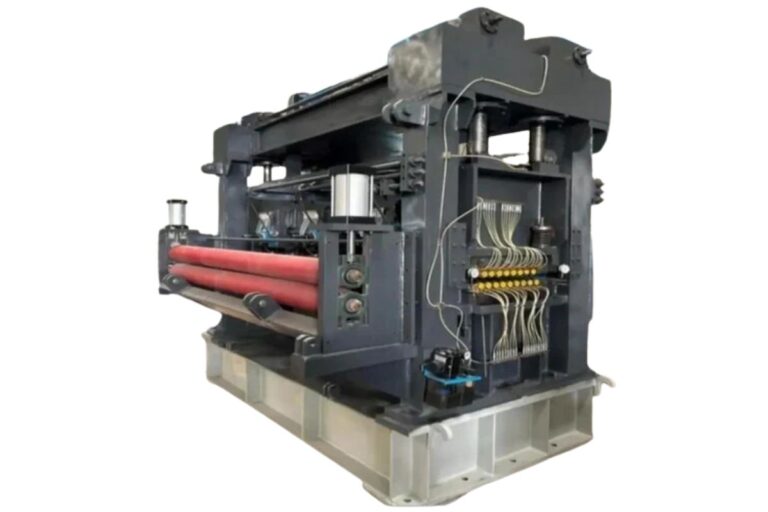
The material is fed through rollers to maintain tension and alignment. - Slitting Section
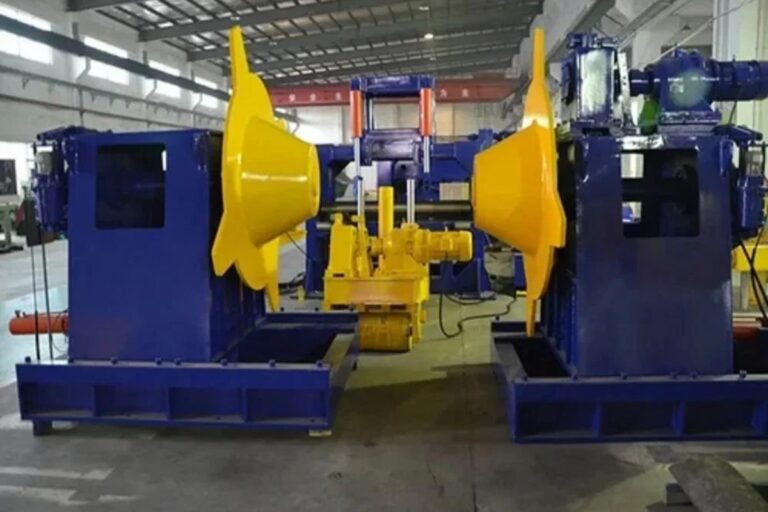
Sharp circular blades or knives cut the material into required widths. - Rewinding Section
The slit materials are rewound into smaller rolls for further use.
Modern slitting machines are equipped with automated controls, ensuring precision, minimal waste, and high-speed operations.
Types of Slitting Machines
Different industries require different cutting techniques. Here are the major types of slitter machines:
1. Log Slitting Machine
Used mainly for cutting rolls like paper, foam, or nonwoven materials into smaller sections.
2. Rewind Slitting Machine
Cuts and rewinds material simultaneously, widely used in the packaging industries.
3. Shear Slitting Machine
Uses two rotary knives like scissors—ideal for metals and thick materials.
4. Razor Slitting Machine
Uses razor blades for thin materials like films and foils.
5. Crush Cut Slitting Machine
Applies pressure to cut materials—commonly used for nonwoven fabrics.
At Ryb Motion Solutions, we help industries select the most suitable slitting machine based on their material type and production needs.
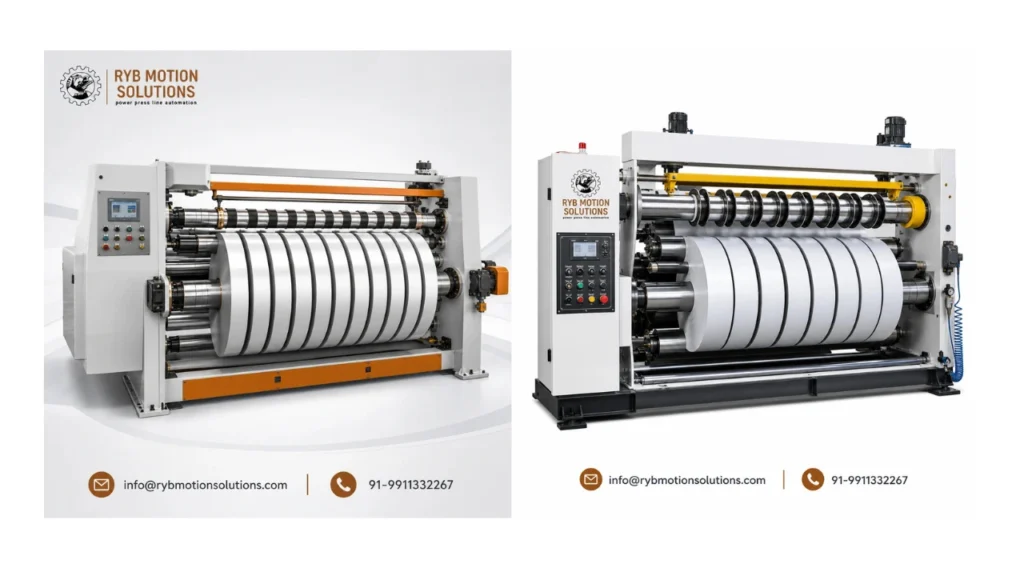
Slitting Machines
Applications of Slitting Machines
The versatility of a slitter machine makes it useful across multiple industries:
- Packaging Industry – Cutting plastic films, laminates, and labels
- Paper Industry – Converting large paper rolls into smaller sizes
- Metal Industry – Slitting steel and aluminum coils
- Textile Industry – Cutting fabrics and nonwoven materials
- Printing Industry – Preparing rolls for printing processes
Benefits of Using a Slitting Machine
Investing in a high-quality slitting machine offers several advantages:
- High Precision Cutting – Ensures accurate width and clean edges
- Increased Productivity – Faster processing compared to manual cutting
- Reduced Material Waste – Optimized cutting reduces losses
- Versatility – Works with various materials and thicknesses
- Cost Efficiency – Saves labor and operational costs in the long run
Why Choose Ryb Motion Solutions?
At Ryb Motion Solutions, we focus on delivering advanced and reliable machinery that meets modern industrial demands. Our solutions are designed to:
- Improve operational efficiency
- Ensure consistent product quality
- Reduce downtime and maintenance costs
- Support sustainable manufacturing practices
Whether you are new to the industry or looking to upgrade your system, understanding what is a slitter machine and how it works will help you make the right decision.
Slitting Machine Specifications
| Parameter | Specification Details |
|---|---|
| Machine Type | Slitting Machine / Slitter Machine |
| Material Compatibility | Paper, Plastic Film, Foil, Metal, Fabric |
| Slitting Width Range | 20 mm – 1600 mm (customizable) |
| Maximum Roll Diameter | Up to 1000 mm |
| Core Diameter | 3 inch / 6 inch (custom options available) |
| Slitting Speed | 50 – 500 m/min |
| Cutting Method | Razor / Shear / Crush Cut |
| Number of Slitting Knives | 5 – 30 (depending on application) |
| Unwinding System | Shaft / Shaftless |
| Rewinding System | Differential Shaft / Air Shaft |
| Tension Control | Automatic / Manual |
| Drive System | AC / Servo Motor |
| Control Panel | PLC आधारित / Touch Screen HMI |
| Power Requirement | 5 kW – 50 kW |
| Automation Level | Semi-Automatic / Fully Automatic |
| Machine Structure | Heavy-duty Mild Steel / Fabricated Structure |
| Safety Features | Emergency Stop, Safety Guards |
| Application Industries | Packaging, Printing, Textile, Metal Processing |
| Maintenance | Low Maintenance with High Durability |
Conclusion
The operational process and industry applications of slitting machines become clear now that you know their basic function. A properly constructed slitter machine improves operational efficiency while delivering accurate results at reduced expenses.
Ryb Motion Solutions provides essential guidance that enables businesses to select optimal slitting solutions for maintaining their competitive edge in the market.